Why Your BMI Might Be Lying to You (And When to Trust It)
Millions of people check their BMI and walk away with a number that doesn't tell the whole story.
The Misconception That Sends People Off Track
Body Mass Index is calculated from just two inputs: your height and your weight. Divide your weight in kilograms by the square of your height in meters, and you get a single number that is supposed to classify you as underweight, normal, overweight, or obese. The problem is that weight includes bone, muscle, fat, and water, and BMI cannot tell the difference between any of them.
A 180-pound professional athlete standing 5 feet 10 inches tall gets the same BMI as a sedentary person with the same measurements: roughly 25.8, just inside the 'overweight' zone. One of those people is at risk; the other probably isn't. Yet both are handed the same label.
Where BMI Actually Does Its Job Well
Despite its limitations, BMI remains useful as a population-level screening tool. Epidemiological studies involving hundreds of thousands of participants consistently show that people with a BMI above 30 face statistically higher risks of type 2 diabetes, cardiovascular disease, and certain cancers. At the extremes, the signal is clear enough to act on. Try the body mass index calculator to see your own numbers.
It also works reasonably well for sedentary adults with average muscle mass, which, statistically, describes most of the population. If you are a 45-year-old office worker who does not lift weights regularly, a BMI of 32 is a meaningful data point worth discussing with your doctor. The mistake is treating the number as a diagnosis rather than a starting question.
Groups for Whom the Standard Thresholds Don't Apply
Age, sex, and ethnicity all affect how BMI translates to actual health risk. Research published by the World Health Organization found that people of Asian descent face elevated metabolic risk at BMI levels several points lower than standard cutoffs, around 23 rather than 25 for 'overweight'. Several Asian countries now use adjusted thresholds as a result.
Older adults present the opposite problem. Losing muscle mass as you age, a process called sarcopenia, can keep your BMI in the 'normal' range even as your body fat percentage climbs to a level that raises cardiovascular risk. A 70-year-old with a BMI of 24 may actually benefit from gaining a few pounds of muscle, not losing them.
How to Use Your BMI Number Productively
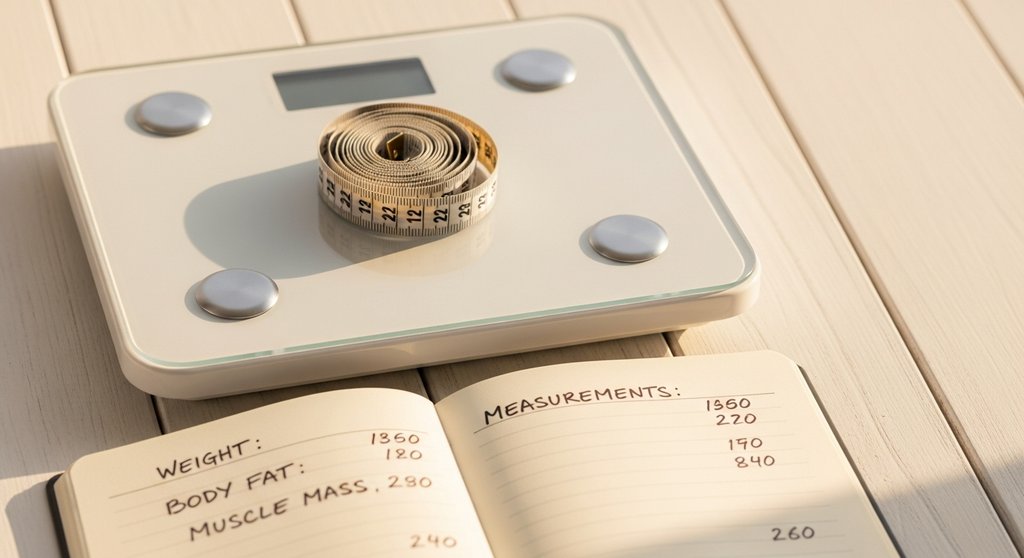
Start by getting your number. Use a body mass index calculator to get the baseline, then treat it as one input among several rather than a verdict. Pair it with waist circumference, which the National Institutes of Health flags above 35 inches for women and 40 inches for men as a separate risk indicator, and if possible, a body fat percentage reading from a DEXA scan or bioelectrical impedance device.
The goal is to triangulate. If your BMI says 'overweight' and your waist circumference is also elevated and your energy levels have declined, that convergence is worth taking seriously. If your BMI is borderline but your waist is trim and you are physically active, a slightly elevated number deserves context before it drives any decisions.
Tracking your BMI over time matters more than any single reading. A shift of two or three points over 12 months is a meaningful trend, even if the absolute number sits in a gray zone. Consistent measurement using the same inputs gives you a reliable signal that a one-time check simply cannot.